
Sleep, routines and the early years: supporting your child’s individual rhythm
Sleep can be one of the biggest topics in family life.
Early starts, bedtime battles, changing naps and restless nights are all common in the early years.
A predictable routine can help children feel safe and ready for sleep. But every child is different. Some children settle best with quiet, low light and stillness. Others need movement, sensory input, deep pressure or extra connection before their body feels calm enough to rest.
At Sanctuary Early Learning Adventure, we believe sleep and rest routines should support the whole child. That means noticing each child’s needs, working in partnership with families and creating rhythms that feel safe, respectful and realistic.
Why does sleep matter in the early years?
Sleep is not just “time out” from the day. It plays an important role in children’s learning, growth, emotional wellbeing and physical health.
During sleep, children’s brains process new experiences. Their bodies rest and repair. Their emotions also have time to reset after a busy day of playing, learning, connecting and exploring.
When children are well rested, they often find it easier to:
- concentrate and engage in play
- manage big feelings
- cope with transitions
- connect with others
- explore their world with confidence.
General guidance suggests toddlers usually need around 11 to 14 hours of sleep across a day, including naps. Preschool children usually need around 10 to 13 hours. However, these are general ranges only. Some children naturally need a little more or less sleep, and sleep needs can change during growth, illness, development or family transitions.
Why do routines help children feel secure?
Young children feel more confident when they know what comes next.
A routine is not about being rigid. It is about creating a familiar rhythm that helps your child’s body and mind prepare for rest. When the evening feels predictable, children can relax into the pattern rather than wondering what is coming next.
A bedtime routine might include:
- dinner
- bath or shower
- pyjamas
- quiet play
- story time
- cuddles
- a consistent goodnight.
For many children, this gentle wind-down is enough. For others, it may only be one part of what they need.
What if a calm bedtime routine is not enough?
Some children do not move from “busy day” to “sleepy body” easily.
A calm bedtime routine is often helpful, but it may not suit every child on its own. Some children need their sensory system to feel organised before they can rest. This can be especially true for children who are very active, sensitive to noise or touch, easily overstimulated, or seeking lots of movement and body input.
You might notice your child:
- jumps, crashes or climbs before bed
- seeks tight cuddles or firm pressure
- becomes unsettled when the house suddenly gets quiet
- finds it hard to lie still
- asks for repeated connection, comfort or reassurance
- seems tired but “wired”.
This does not mean your child is being difficult. It may mean their body needs a different kind of support before sleep.
How can sensory input support sleep?
Sensory input is the information children receive through their body and senses. This includes movement, touch, sound, light, pressure, smell and body awareness.
For some children, the right sensory input before bed can help their body feel settled. The key is to choose input that supports regulation rather than creating more excitement.
Helpful sensory supports may include:
- heavy work, such as carrying books, pushing a laundry basket or helping tidy toys
- slow animal walks, wall pushes or gentle stretching
- firm cuddles, if your child enjoys them
- a warm bath or shower
- soft pyjamas or bedding that feels comfortable
- a predictable story or song
- dim lights and reduced background noise
- a quiet fidget, soft toy or comfort item.
Some children may enjoy gentle rocking, while others prefer stillness. Some may love a firm goodnight cuddle, while others may not like too much touch when they are tired. The most helpful routine is one that respects your child’s cues.
How do naps and rest work in childcare?
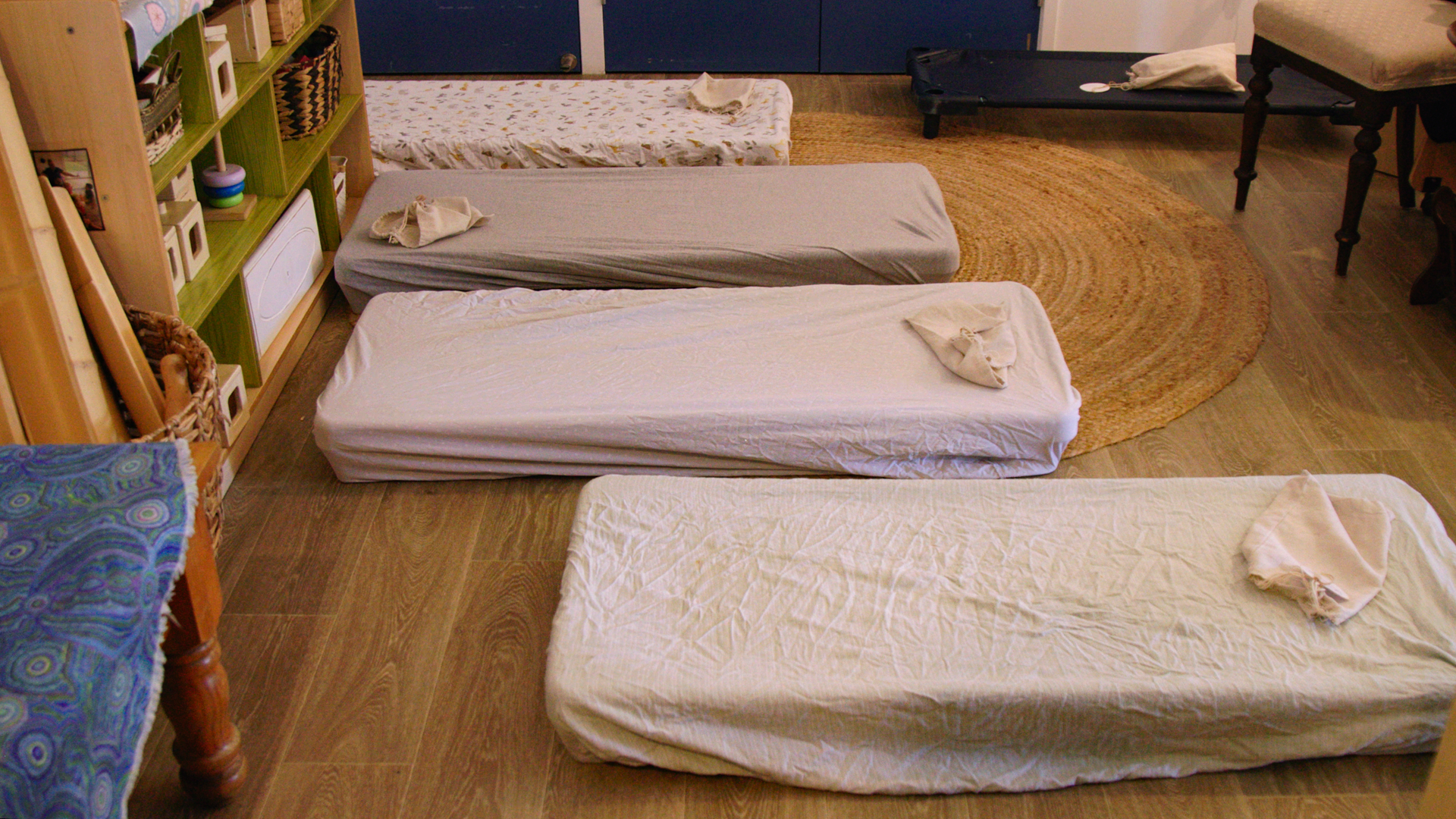
Rest is an important part of the day in our centres.
At Sanctuary, we create calm, comfortable spaces where children can sleep or rest according to their individual needs. We understand that some children still need a daytime sleep, while others may need quiet rest, a book, gentle music or time to recharge.
We work in partnership with families so home and centre routines feel as connected as possible. If your child’s sleep needs are changing, we welcome a conversation with your centre team.
Together, we can talk about:
- your child’s usual sleep and wake times
- changes to naps
- comfort items
- sensory preferences
- settling strategies that work at home
- what we notice during the childcare day.
This shared approach helps children feel secure across both home and centre.
What can families do when sleep feels tricky?
Even with a thoughtful routine, sleep can still have ups and downs.
Illness, teething, growth, new skills, separation anxiety, travel, family changes and busy days can all affect sleep. Sometimes children need more comfort. Sometimes they need more movement. Sometimes they need a simpler routine with fewer demands.
A helpful starting point is to ask:
- Is my child overtired?
- Is bedtime too late or too early?
- Does my child need more movement during the day?
- Does my child need sensory input before bed?
- Is the routine too long or too stimulating?
- Does my child need more connection before separation?
- Has anything changed at home or childcare?
If sleep challenges are ongoing or you are worried about your child’s wellbeing, speak with your GP, child health nurse or another trusted health professional.
You do not have to work it out alone.
What is the best bedtime routine for young children?
The best bedtime routine is predictable, loving and suited to your child. For some children, this means a calm routine with stories and cuddles. For others, it may include movement, heavy work or sensory input before quiet time begins.
Should bedtime always be calm?
Bedtime should usually move towards calm, but some children need active regulation first. Gentle movement, deep pressure or heavy work can help some children settle before the quieter part of the routine.
What is heavy work for children?
Heavy work means activities that use the muscles and joints. Examples include pushing, pulling, carrying, climbing or stretching. Before bedtime, heavy work should be slow and purposeful, not rough or overstimulating.
What if my child gets more energetic before bed?
Some children seem to become more active when they are tired. This may be a sign they are overtired, overstimulated or seeking sensory input. A shorter routine, earlier bedtime or calming movement may help.
Should naps stop when bedtime becomes difficult?
Not always. Some children still need a nap, while others may need the nap adjusted. Before removing naps, it can help to look at the full day, including wake time, activity levels, rest opportunities and bedtime routine.
How can childcare support my child’s sleep routine?
Your child’s educators can work with you to understand your child’s rest needs, comfort items, sleep cues and settling preferences. Sharing what works at home helps create consistency between home and care.
When should I seek extra help for sleep?
Seek support if sleep challenges are ongoing, affecting your child’s wellbeing, causing distress for your family or linked with breathing concerns, snoring, feeding issues, anxiety or developmental concerns. Your GP or child health nurse is a good place to start.
A gentle reminder for families
Good sleep is not about creating a perfect routine every night. It is about building a rhythm that helps your child feel safe, understood and supported.
Some children need quiet. Some need movement. Some need closeness. Some need fewer words and less stimulation. When we notice and respond to these differences, we help children rest, grow and thrive in a way that honours who they are.
At Sanctuary Early Learning Adventure, we partner with families to support each child’s wellbeing, routines and sense of belonging — from the busy moments of play to the quiet moments of rest.
Recent Articles From Sanctuary