
The magic of reading together: building literacy from birth
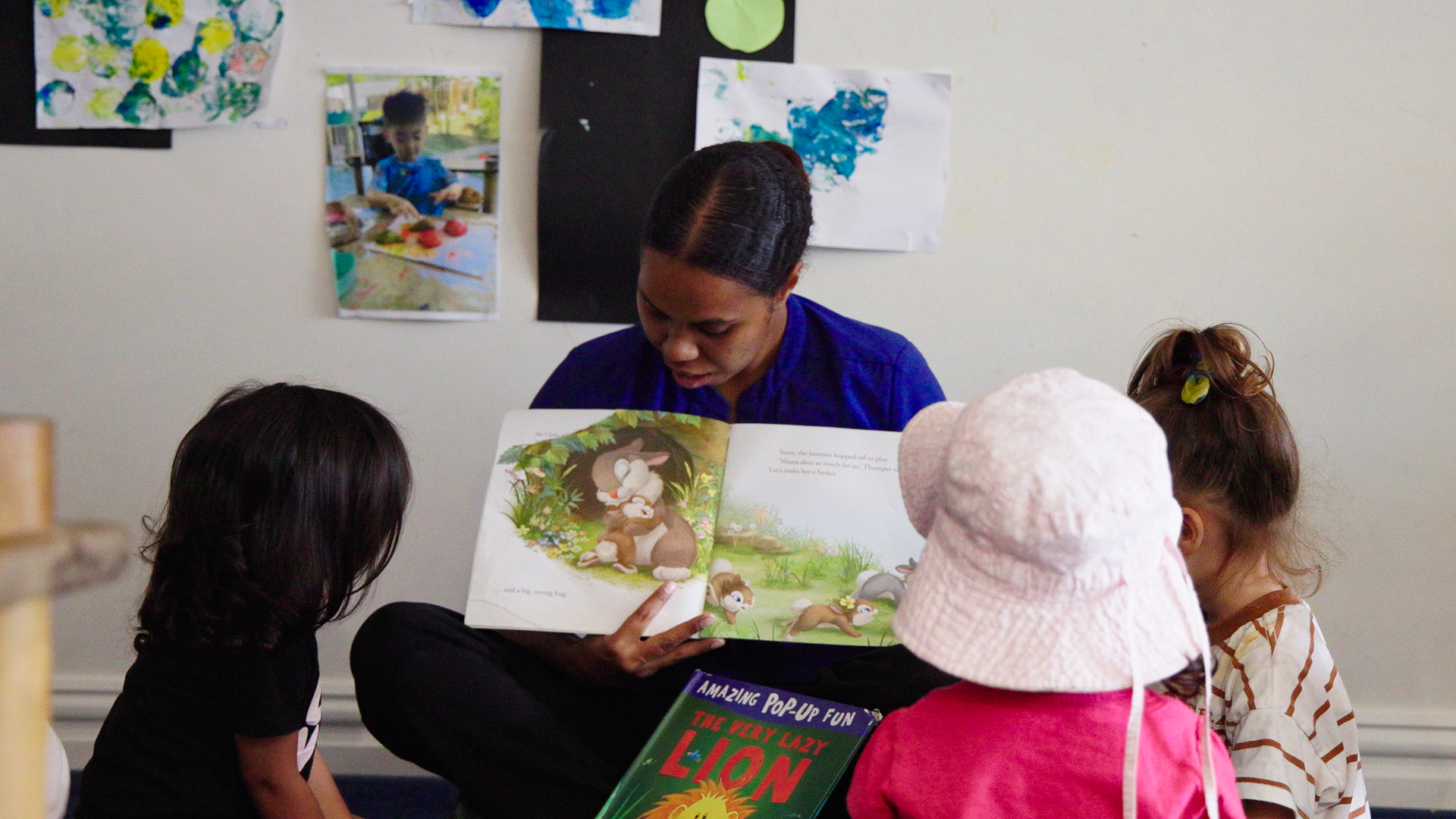
There are few things as lovely as sharing a book with a child.
The warmth of them snuggled close. The giggles at a favourite page. The familiar chorus of “read it again”.
Reading together is one of the simplest and most powerful ways to support your child’s early learning.
From birth, shared stories help build language, strengthen connection, spark imagination and create a lifelong love of books.
Why is reading together so powerful?
Reading with your child does far more than introduce letters and words.
It helps children:
- build vocabulary
- hear the rhythm and patterns of language
- develop listening and attention skills
- understand emotions, people and the world around them
- grow their imagination
- feel close, calm and connected with you.
Shared reading also supports children to become confident communicators. This connects beautifully with the Early Years Learning Framework, which recognises communication, language and literacy as important parts of children’s learning and development.
At Sanctuary Early Learning Adventure, we see reading as more than a school-readiness activity. It’s a joyful, relationship-rich experience that helps children feel safe, valued and curious.
Reading with your child is not just teaching them to read. It’s teaching them to love it.
Can you start reading to babies from birth?
You can start reading to your baby from birth, or even before!
You don’t need to wait until your child can talk, sit up or understand every word. Babies love hearing familiar voices, looking at simple pictures and feeling close to the people who care for them.
In the early months, reading might look like:
- cuddling together with a soft or board book
- pointing to simple pictures
- using a gentle, expressive voice
- singing rhymes or repeating favourite sounds
- letting your baby touch, hold or explore the book.
As your child grows, books grow with them. Babies may enjoy high-contrast images and sturdy pages.
Toddlers often love lift-the-flap books, rhyme and repetition. Older children may enjoy longer stories with characters, humour and adventure.
There is no such thing as starting too early.
the science behind it
The science is beautiful: babies begin learning from the sound of your voice before they are even born.
During pregnancy, especially in the later months, babies can hear sounds from outside the womb, including voices, rhythms and patterns of speech. Research suggests newborns can recognise their mother’s voice and may even remember familiar sounds or stories they heard before birth. This does not mean you need to “teach” your baby before they arrive. It simply means your voice is already helping them feel connected to you.
Reading aloud during pregnancy can support early bonding because your baby becomes familiar with the rhythm, tone and comfort of your voice. After birth, that familiar voice continues to help your baby feel safe, settled and connected.
In the early days and months, reading also supports brain development. Babies are born ready to learn from warm, responsive interactions. When you read, talk, sing and cuddle, your baby is hearing language patterns, watching your facial expressions and learning that communication is joyful. The American Academy of Pediatrics recommends shared reading from birth because it supports early literacy, nurturing relationships and healthy brain development.
Reading to a newborn might feel simple, but important things are happening.
Your baby is learning:
- the sound and rhythm of language
- the comfort of a familiar voice
- how connection and communication feel
- the beginnings of attention and listening
- that books are part of loving, everyday routines.
Australian parenting resource Raising Children Network also notes that reading and storytelling with babies and children supports brain development, language, emotions and relationships.
So, whether your baby is still tucked safely in your tummy, lying in your arms or wriggling through tummy time, your voice matters. A gentle story, a nursery rhyme or even a few pages of your favourite book can become one of your baby’s first experiences of connection, comfort and learning.
How does shared reading support early learning?
Shared reading supports early learning because it brings together language, relationships, imagination and play.
When you read aloud, your child hears new words in meaningful ways. They begin to understand how stories work, how books are held and how ideas can be shared through pictures and words.
Reading also supports wellbeing. A familiar story can help children slow down, feel secure and enjoy a calm moment of connection.
This is especially valuable in the early years, when children learn best through warm, responsive relationships and everyday experiences.
At Sanctuary, our learning environments are designed to nurture curiosity, communication and confidence. Stories, songs, conversations and books are part of how children explore ideas, express themselves and connect with others.
How can families make story time more meaningful?
Story time does not need to be perfect. It simply needs to be shared.
Here are some easy ways to bring books to life:
- Use silly voices and lots of expression.
- Point to pictures and name what you see.
- Ask simple questions, such as “What do you think happens next?”
- Let your child turn the pages.
- Pause when your child points, babbles or comments.
- Follow your child’s interests, even if that means reading the same page again.
- Connect the story to your child’s own life - you might say:
“That dog looks like the one we saw on our walk.”
“She feels sad. What could help her feel better?”
“You found the red car. Can you see another one?”
These small conversations help children build language, memory, confidence and connection.
Why do children love reading the same book again and again?
Repetition is a good thing.
If your child wants the same book for the hundredth time, take heart. This is exactly how young children learn.
Each time you read a familiar story, your child has another chance to:
- remember new words
- predict what comes next
- join in with repeated phrases
- notice new details in the pictures
- feel the comfort of something familiar.
Those well-worn favourites, with their cracked spines and memorised pages, are doing wonderful work.
Repetition helps children feel confident because they know what is coming. Over time, they may begin to “read” the story back to you from memory. This is an important early literacy step.
How can families build a daily reading habit?
The most powerful part of reading together is consistency.
Even 10 minutes a day can make a meaningful difference over time. The goal is not to finish a certain number of books. The goal is to create a calm, happy reading rhythm your child looks forward to.
You might try:
- reading before bedtime
- keeping books in the pram, car or nappy bag
- visiting your local library
- letting your child choose the book
- creating a small reading corner at home
- reading recipe books, signs, menus and family cards
- letting your child see you enjoying books too.
Children who see reading valued are more likely to value it themselves.
A daily reading habit can also become a beautiful anchor in family life. It gives children a predictable moment to pause, connect and feel secure.
How does Sanctuary encourage a love of books?
At Sanctuary Early Learning Adventure, reading is woven into everyday learning in warm, playful and meaningful ways.
Across our centres, children are encouraged to enjoy books, stories, songs and conversations as part of their day. Educators use shared reading to support language, creativity, emotional understanding and belonging.
This may include:
- quiet story moments
- group reading experiences
- songs, rhymes and finger plays
- storytelling through play
- books linked to children’s interests
- conversations about characters, feelings and ideas
- literacy-rich learning spaces.
Our approach supports each child as an active, curious learner. Whether a child is turning pages, pointing to pictures, joining in with a rhyme or asking big questions about a story, they are building important foundations for lifelong learning.
So tonight, when you reach for that favourite story once again, know that you are giving your child one of the greatest gifts there is.
A love of reading opens doors for a lifetime. And it begins right there, in your lap, one page at a time.
When should I start reading to my baby?
You can start reading to your baby from birth. Even newborns benefit from hearing your voice, feeling close to you and being introduced to the rhythm of language.
How long should I read with my child each day?
Even 10 minutes a day is valuable. Short, regular reading moments are often more helpful than long sessions that feel rushed or stressful.
What books are best for babies?
Babies often enjoy sturdy board books, cloth books, simple pictures, high-contrast images, rhyme and rhythm. Books they can safely touch and explore are a great place to start.
Is it okay if my toddler only wants the same book?
Yes. Repetition helps young children learn. Reading the same book again and again builds memory, vocabulary, confidence and a sense of security.
What if my child will not sit still for a whole story?
That’s okay. Young children often move, point, talk or wander during stories. Keep reading relaxed and follow their interest. Even a few pages can be meaningful.
How can I make reading more interactive?
Ask questions, use expression, point to pictures, let your child turn pages and connect the story to real life. Shared reading works best when it feels like a conversation.
Does storytelling without a book still count?
Yes. Songs, rhymes, family stories and made-up stories all support language and imagination. Books are wonderful, but storytelling can happen anywhere.
How does reading help with school readiness?
Reading supports vocabulary, listening, attention, memory, emotional understanding and early literacy skills. These all help children feel more confident as they grow and prepare for school.
Recent Articles From Sanctuary