Why Strong Family Partnerships in Early Learning on the Gold Coast
Choosing an early learning centre is about more than finding a place for your child to spend their day. It’s about finding a community where your child — and your whole family — can feel known, welcomed and supported.
Strong partnerships between families and educators help create consistency, trust and a sense of belonging around a child. When families and educators communicate openly, share what they know and work together, children can feel more secure and understood.
At Sanctuary Early Learning Adventure, we believe supporting a child also means supporting the family around them.
That belief shapes how we build relationships with families across our Gold Coast communities in Ashmore, Maudsland and Southport.
What does family partnership mean in early learning?
A strong family partnership is more than receiving an update about what your child did during the day.
It’s an ongoing relationship built on communication, trust and mutual respect.
Families know their children deeply. You understand their personality, routines, interests, relationships, culture, strengths and the little things that help them feel comfortable.
Educators bring another perspective. We see how children learn, play, communicate, build friendships and explore their environment throughout the day.
When these perspectives come together, we can build a fuller picture of the child.
That shared understanding can help us respond thoughtfully to their needs, interests and experiences.
Why do strong family relationships matter for children?
Children are surrounded by relationships.
The relationships they have with their family, educators and wider community all contribute to how safe, connected and confident they feel.
When the important adults in a child’s life communicate and work together, it can create greater consistency between home and early learning.
Sometimes the information families share may seem small, but it can make a meaningful difference.
You might tell us that your child:
- had a difficult night
- is excited about a family celebration
- has become interested in dinosaurs
- is adjusting to a new sibling
- is finding a particular routine challenging
- has experienced a change at home.
Knowing this helps educators understand what may be happening in your child’s world.
In the same way, educators can share what they are noticing during the day, including new interests, developing friendships, emerging skills or moments when your child may need extra reassurance.
These conversations help connect the two most important parts of a young child’s world — home and their early learning community.
How can family partnerships support learning?
Children bring their experiences, interests and relationships into everything they do.
When families and educators share information, learning can become more connected to the child’s real world.
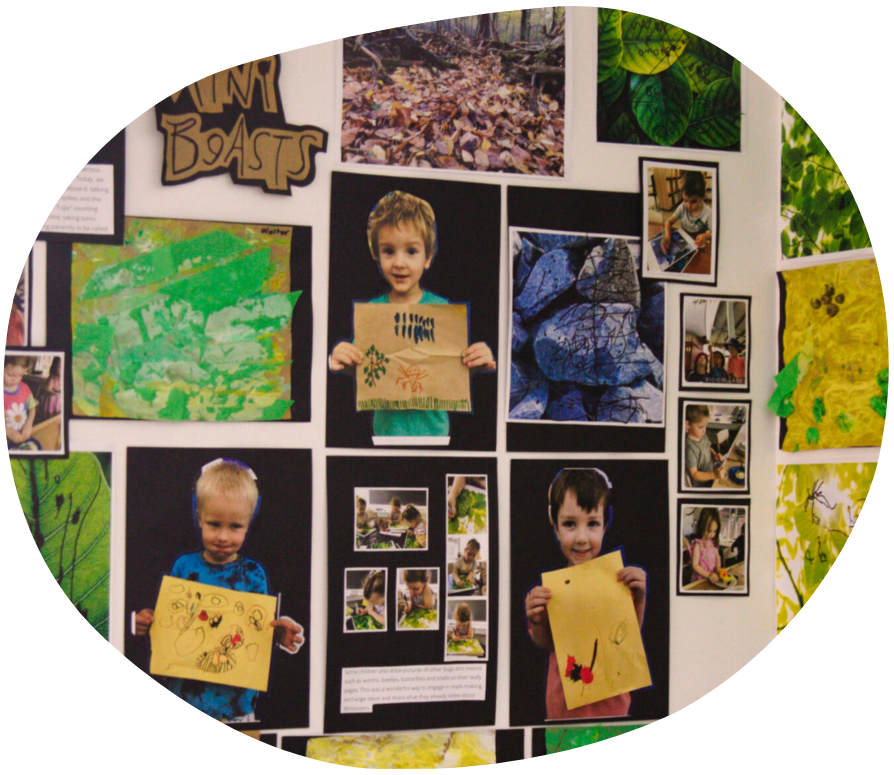
For example, your child might become fascinated by insects they’ve found in the backyard.
When you share that interest with their educators, it could inspire books, drawing, outdoor exploration, conversations about habitats or opportunities to observe the natural world.
An educator may also notice an interest emerging at the centre and share it with you.
That might lead to further conversations and experiences at home.
This creates continuity around the child.
Rather than home and early learning feeling like two separate worlds, children experience adults who are interested in what matters to them and willing to build on their curiosity together.
Why does supporting a child sometimes mean supporting the whole family?
Every family will experience challenges at different times in life.
Some families may be navigating a disability diagnosis, mental health concerns, family stress or periods of uncertainty.
Others may simply need extra support during a difficult season.
No two families will experience these situations in exactly the same way.
At Sanctuary, we believe meaningful family partnerships recognise the whole family — not just what happens during the hours a child is at the centre.
Sometimes that means listening.
Sometimes it means helping a family work through a transition.
And sometimes it means helping connect families with additional support in their community.
This is where our Family Model of Support comes in.
What is Sanctuary’s Family Model of Support?
Our Family Model of Support is a voluntary and personalised approach designed to walk alongside children and families in a way that feels safe, respectful and supportive.
Rather than offering a one-size-fits-all program, we work closely with each family to understand their circumstances, strengths and needs.
The focus is on both the child and the family.
Our aim is to help families build confidence, stability and connection over time while respecting that every family’s journey is different.
The model is guided by four key pillars.
What are the four pillars of our Family Model of Support?
1. Intentional support tailored to each family
Every family has different experiences, strengths and needs.
We take time to understand what is happening for the family and what support may feel practical and meaningful.
There is no standard pathway that every family must follow.
Support is shaped around the individual child and family.
2. A voluntary process built on trust
Relationships matter.
Families are supported without judgement, pressure or expectation.
Participation is voluntary, and trust is built through consistency, care and genuine connection.
We want families to feel comfortable having conversations with us, knowing they will be listened to and respected.
3. A structured yet flexible approach
Life changes.
A family’s needs today may be different from what they need in a few months.
Our Family Model of Support provides structure and consistency while remaining flexible enough to adapt as circumstances change.
Some families may benefit from short-term support.
Others may value an ongoing connection over a longer period.
There is no set formula.
4. Connection to education, care and community
Families are part of a much wider community.
When appropriate, we can help families strengthen connections both within our early learning environment and with wider community services and support networks.
Our role is not to have every answer.
It is to help families feel seen, heard and supported, and to help connect them with the people, services and opportunities that may be useful.
What can family support look like in practice?
Support looks different for every family.
Depending on individual circumstances, it may include:
- referrals to support services
- Team Around the Child meetings
- transition-to-school planning
- psychology or mental health support referrals
- family support groups
- housing support referrals
- food insecurity support
- help with home routines and time management
- parenting programs, including Circle of Security and Triple P Online.
For some families, one conversation or referral may be enough.
Others may benefit from ongoing support and regular connection.
The important thing is that support remains personalised, voluntary and centred around what feels helpful and achievable for the family.
How can strong partnerships help during times of change?
Change can be a significant part of a young child’s life.
Children may be:
- starting child care for the first time
- transitioning into a new room
- welcoming a new sibling
- experiencing changes at home
- preparing for kindergarten
- preparing to start school
- adjusting to new routines or family circumstances.
During these times, communication between families and educators becomes particularly valuable.
Families can help educators understand what is happening in the child’s world.
Educators can share what they are observing during the day.
Together, we can consider what may help the child feel more comfortable and supported.
That may be something simple, such as maintaining a familiar routine.
At other times, a family may benefit from transition planning, additional conversations or connection with external support.
The goal isn’t to make every transition effortless.
It is to ensure children and families know they have people around them who are willing to listen, communicate and work alongside them.
Why does a sense of belonging matter for families too?
Belonging isn’t only important for children.
Families need to feel that they are part of the early learning community as well.
When families feel welcomed, respected and included, children can see that the important people in their lives have a place within their centre community.
For families with limited support networks, those relationships can become especially meaningful.
Over time, trusted connections may help families feel more confident asking questions, seeking help or connecting with the wider community.
At Sanctuary, we want families to know that they don’t have to have everything figured out before they walk through our doors.
Early learning can be part of the village that surrounds a family.
What does a strong family partnership look like day to day?
Strong partnerships are usually built through many small moments.
They can include:
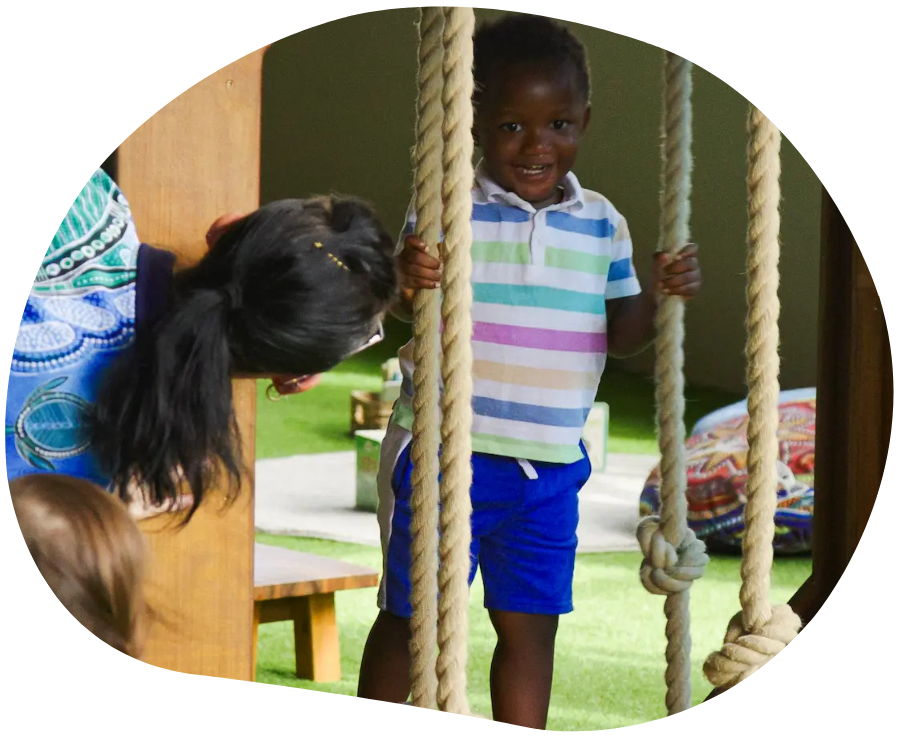
- warm conversations at drop-off and collection
- sharing changes to routines, sleep or family circumstances
- discussing children’s interests and learning
- asking questions openly
- sharing family goals and priorities
- talking about culture and family traditions
- working together through transitions
- involving families in planning where appropriate
- celebrating milestones together
- listening when something feels difficult
- connecting families with additional support when it may be helpful.
Most importantly, families should feel comfortable speaking with their child’s educators.
Partnership works both ways.
What should Gold Coast families look for in an early learning centre?
When you visit an early learning centre, it’s natural to look at the rooms, outdoor spaces, resources and learning programs.
We also encourage families to look closely at relationships.
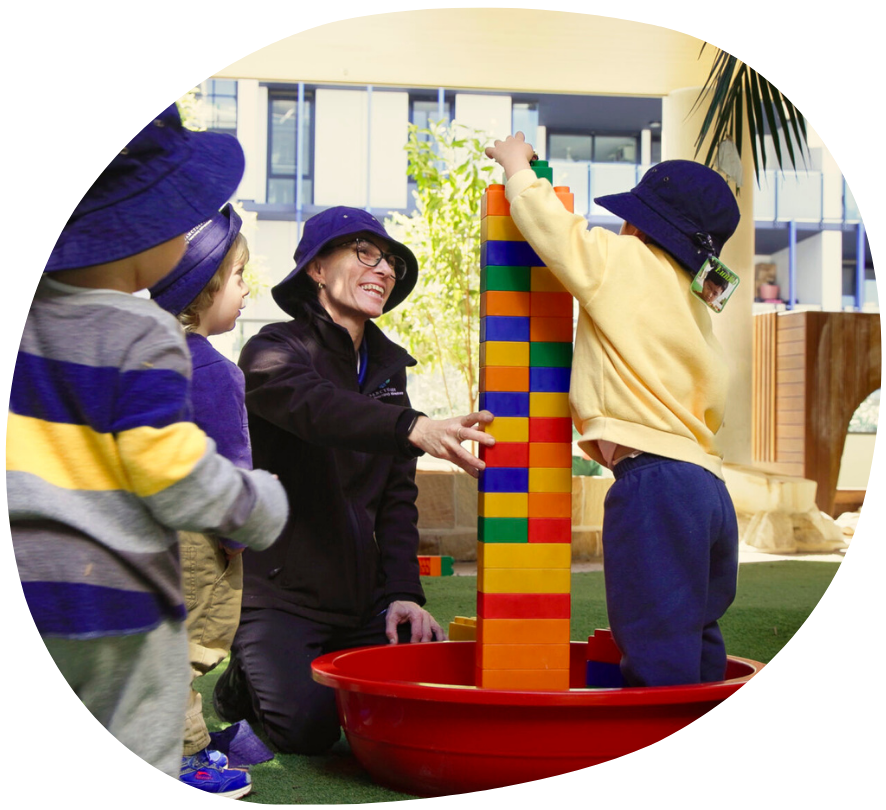
Notice how educators interact with children.
Notice how families are welcomed.
And ask questions about how communication and support work in practice.
You might ask:
- How will you get to know my child and family?
- How do educators communicate with families?
- How can I share information about what is happening at home?
- How will I hear about my child’s interests and development?
- What happens if my child is finding a transition difficult?
- How can families contribute to their child’s learning?
- How does the centre support families during challenging periods?
- Can the centre help connect families with external services where appropriate?
- What happens if I have a concern or need extra support?
There isn’t one perfect answer to every question.
What matters is whether you feel the centre is genuinely willing to listen, communicate and build a relationship with your family.
How does this approach support Gold Coast families at Sanctuary?
Across our Gold Coast communities, we aim to create early learning environments where children and families feel known, connected and supported.
At Sanctuary Ashmore, we welcome families from Ashmore and surrounding Gold Coast communities into a warm environment where relationships, belonging and connection are part of everyday life.
At Sanctuary Maudsland, our connection with the northern Gold Coast and hinterland community complements an environment where children can explore, build relationships and follow their curiosity.
At Sanctuary Health and Knowledge Precinct in Southport, families are part of a learning community situated within one of the Gold Coast’s important health, education and employment precincts.
Every centre community is different.
Every family is different too.
Our approach remains grounded in the same values — connection, collaboration, respect and genuine care.
Why do we describe family support as a village approach?
There is an old idea that raising a child takes a village.
For us, being part of that village means more than simply being present during a child’s early learning years.
It means showing up.
Listening.
Building trust.
Recognising when a family might need extra support.
And helping families connect with the people and services around them when that support may be useful.
We know that sometimes the most meaningful thing someone can do is walk alongside a family during a difficult season.
That is why our Family Model of Support sits so naturally alongside our approach to early learning.
Supporting children and supporting families are deeply connected.
It takes a village, and we choose to be part of yours.
Looking for child care on the Gold Coast?
If you’re exploring early learning options on the Gold Coast, we encourage you to visit a centre in person (and take our handy Tour Companion guide)
Meet the educators.
Explore the environment.
Ask how the centre communicates with families and what support looks like when life becomes challenging.
Most importantly, consider whether your family feels welcomed, respected and heard.
You can connect with Sanctuary Ashmore, Sanctuary Maudsland or Sanctuary Health and Knowledge Precinct in Southport to learn more about our approach and arrange a centre tour.
Book a tour of one of our Gold Coast centres and discover a place where your child can feel safe, known and truly at home.
For families preparing for the transition into childcare, read our guide to helping babies settle into childcare.
Frequently asked Questions
Why are family partnerships important in early childhood education?
Strong family partnerships help educators and families share information about a child’s interests, routines, experiences and needs. This helps create greater consistency between home and early learning and allows educators to understand each child more fully.
What is Sanctuary’s Family Model of Support?
Sanctuary’s Family Model of Support is a voluntary and personalised approach that supports both children and their families. It is built around trusted relationships, tailored support, flexibility and connection to education, care and community services.
What types of support can Sanctuary help families access?
Depending on a family’s needs, support may include referrals to services, Team Around the Child meetings, transition-to-school planning, psychology or mental health referrals, family support groups, housing or food insecurity referrals, help with routines and parenting programs such as Circle of Security and Triple P Online.
How should parents communicate with their child’s educators?
Families can share anything that may help educators understand and support their child. This might include changes to routines, sleep, interests, family circumstances, cultural practices, milestones or challenges happening at home.
Can educators help if my child is struggling with a transition?
Educators can work with families to understand what the child is experiencing and consider strategies that may help. Depending on the situation, this might include changes to routines, additional communication, transition planning or connection with further support.
Where does Sanctuary have early learning centres on the Gold Coast?
Sanctuary Early Learning Adventure has Gold Coast centres in Ashmore, Maudsland and the Health and Knowledge Precinct in Southport. Families can contact their preferred centre to learn more about the environment, educators and Family Model of Support.
Recent Articles From Sanctuary