The Play is in the Child: How Sanctuary Nurtures Deep, Meaningful Learning Through Play

Imagine walking into a clothing sale. The music is relentless, items are crammed onto every rack, bright colours compete for your attention from every direction, and someone bumps you out of the way just as you reach for something interesting. You feel overwhelmed, disengaged, and very quickly you want to leave.
Now imagine a child in a classroom that feels exactly like that.
This is a question we ask our educators regularly at Sanctuary Early Learning Adventure. What does it actually feel like to be a child in our space? What can they see from their low vantage point? Is the environment calm or chaotic? Does it invite curiosity or does it trigger sensory overload?

The way we design our environments and approach play, is not accidental. It is deeply intentional, grounded in research, connected to the Early Years Learning Framework, the Queensland Kindergarten Learning Guideline, and shaped by years of thoughtful, collaborative practice. In this blog, we want to pull back the curtain and share some of the theory behind what you see when you walk into a Sanctuary centre.
The Environment as the Third Teacher
At Sanctuary, we believe the environment is one of the most powerful educators in the room. This is a principle drawn from Reggio Emilia approach the idea that space, light, materials, and arrangement all communicate something to children, often before a single adult says a word.
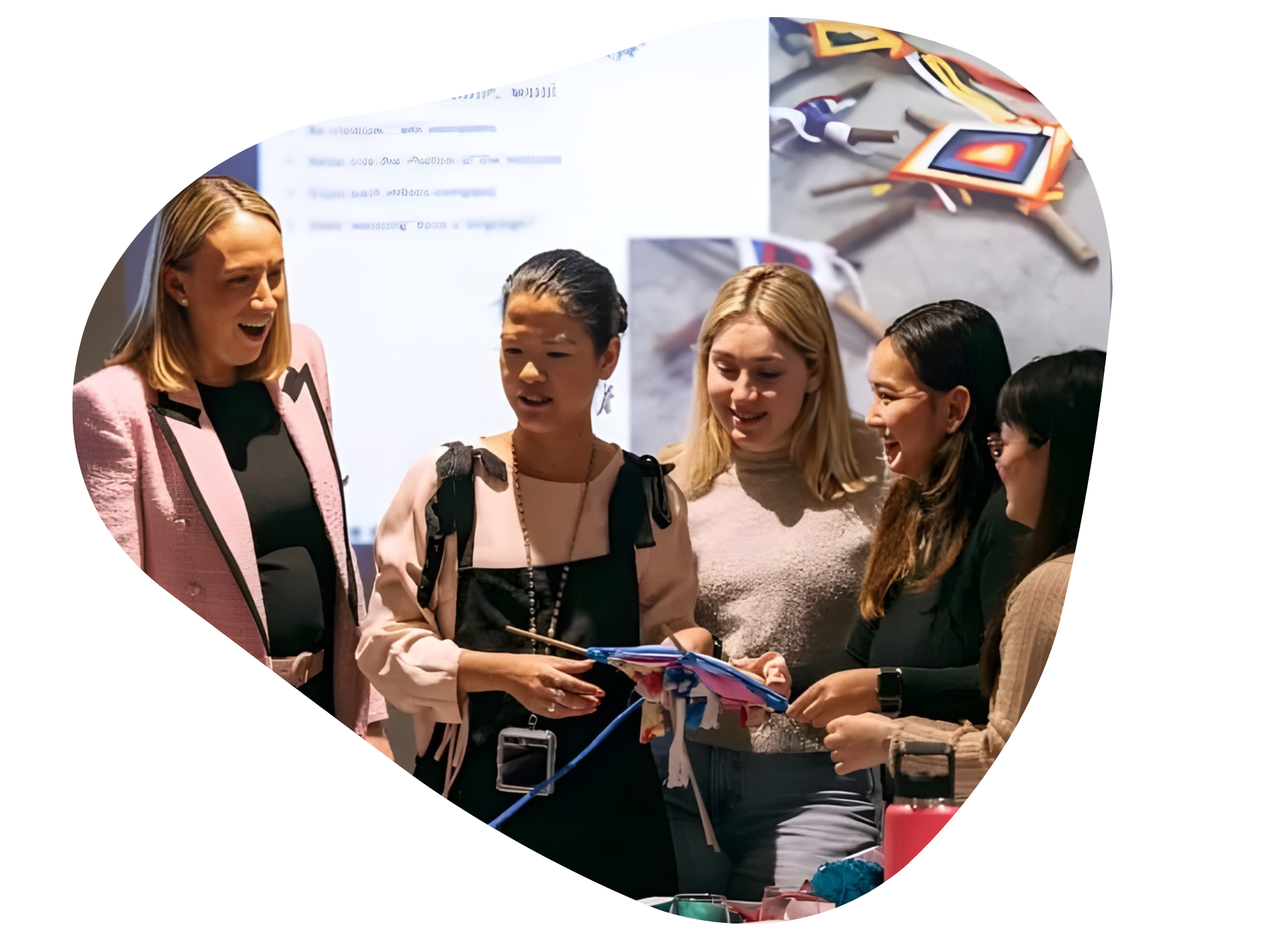
For the past three years, we have worked in deep collaboration with pedagogical consultant Kelly Goodsir to transform the spaces across our six centres. Kelly's work with our teams is guided by seven design principles that shape how every room is planned, resourced, and continually evolved. This is not a one-off renovation project. It is an ongoing, reflective process because as our children grow and our understanding deepens, our environments grow and deepen too.

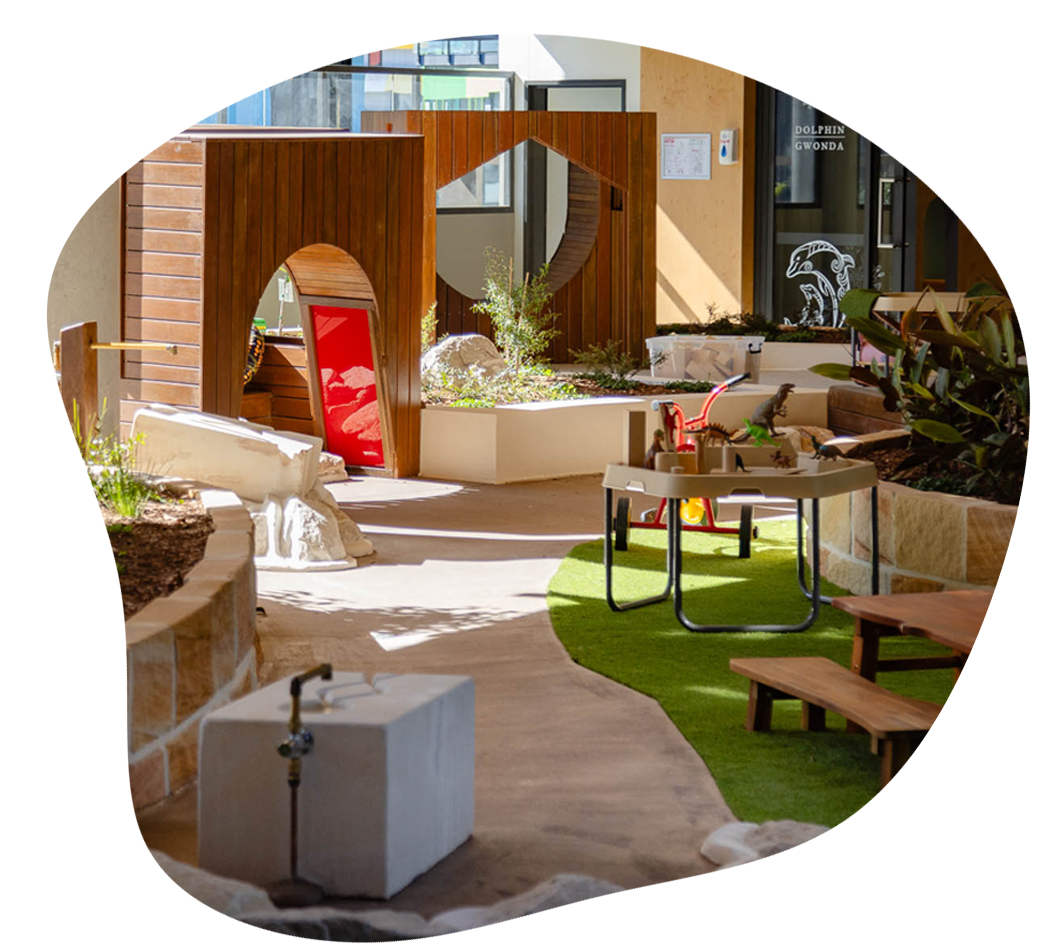
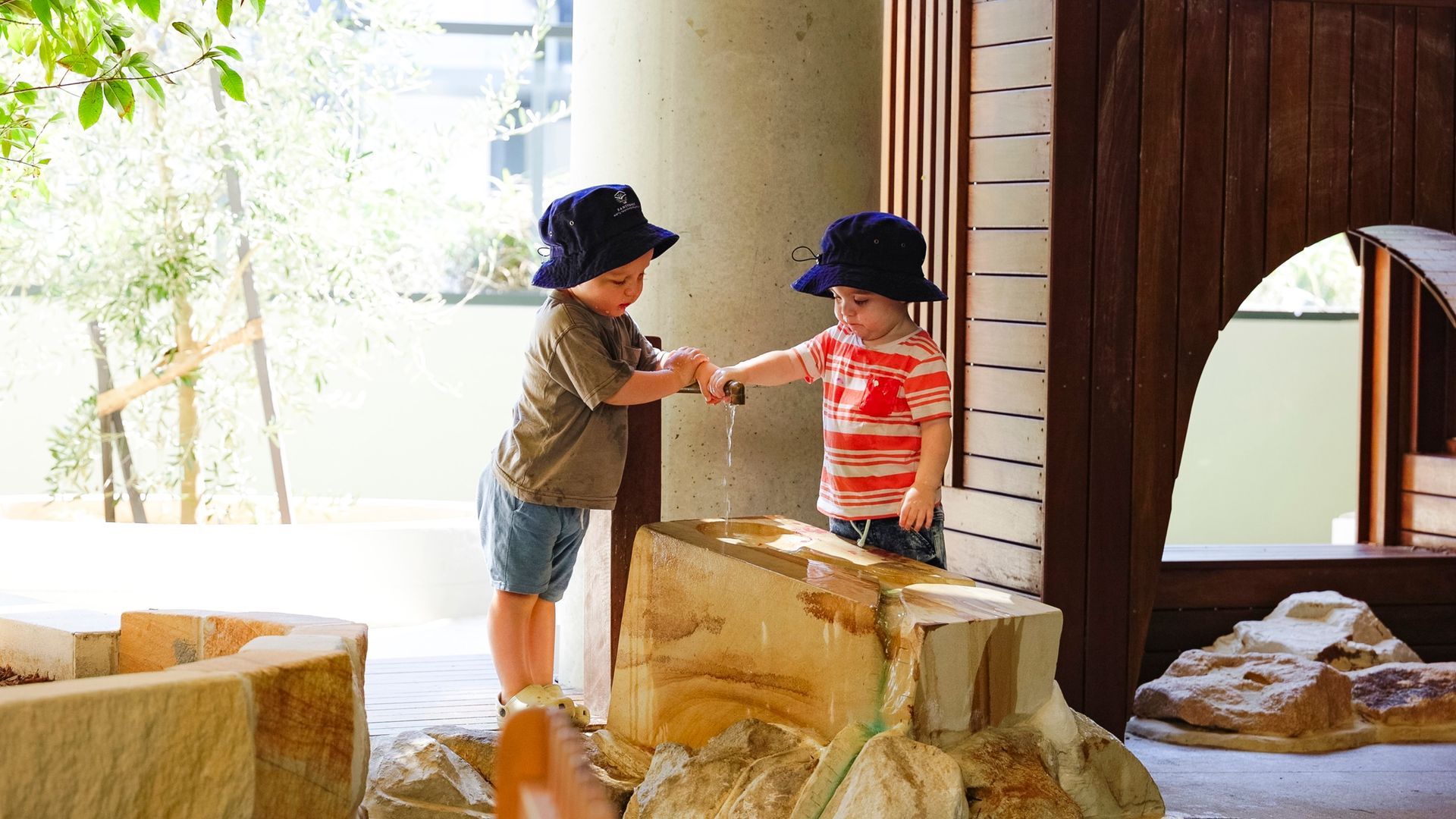
When you walk into a Sanctuary centre, you will notice: natural materials, considered lighting, spaces for both quiet retreat and active exploration, intentional resource placement, and an aesthetic that is calm, considered, and beautiful. This is not decoration. Every element is there for a reason.
"The child has a different relationship to his environment from ours...
the child absorbs it."
— Maria Montessori
Exploration vs Play: Understanding the Difference
One of the most important pieces of research we share with our educators comes from Dr John Richer, Paediatric Psychologist at the John Radcliffe Hospital. Dr Richer identified that when children encounter a new object or toy, they move through two distinct stages.
In the exploration stage, a child asks: What does this do? They are discovering the properties of the object its weight, texture, sound, movement. This is important, but it is not yet play.
In the play stage, a child asks: What can I do with this? And this is where the magic happens. This is where creativity, imagination, initiative, and adaptability thrive.

Here is the critical insight: when children are confronted with too many toys, they spend most of their time exploring and very little time actually playing. By offering fewer, more meaningful resources, we give children more time for deep, imaginative, self-directed play.
This is why you will not find Sanctuary classrooms overflowing with plastic toys. You will find carefully chosen, thoughtfully presented resources that invite children to linger, wonder, and create.
Open-Ended Resources and the Value of Loose Parts
At Sanctuary, we are intentional about the balance of resources we offer. We aim for approximately 75% open-ended resources and 25% close-ended resources and this ratio is not arbitrary. It reflects decades of research into how children learn best.
Close-ended resources - puzzles, shape sorters, books have a clear objective and a clear endpoint. They are valuable and have a place in our classrooms. But they are quickly completed and quickly set aside.
Open-ended resources - loose parts, natural materials, wooden blocks, silk scarves, rocks, pine cones, fabric, guttering, crates — have no fixed outcome. The child is the author. A pine cone can be a cooking ingredient, a paintbrush, a creature, a counter, or simply something beautiful to hold. This kind of resource does not dictate the play to the child. It liberates it.
We also offer children what Elinor Goldschmied called 'Treasure Baskets' particularly for our youngest children. Elinor's insight was simple but profound: plastic offers very little sensory variety. Even brightly coloured plastic items all smell, taste, and feel the same. Natural objects a lemon rind, a smooth pebble, a wooden spool, a feather, a metal whisk each carry their own unique sensory world. For babies who are learning about their environment through every sense, this richness matters deeply.
"As we decrease the quantity of a child's toys and clutter,
you increase their attention and capacity for deep play."
— Kim John Payne
Uninterrupted Play and the Flow State
You may have heard the term 'flow state' the deeply engaged, almost meditative state of absorption that both children and adults can enter when they are fully immersed in something meaningful. For children, play is the vehicle to this state. And the flow state is where the deepest learning happens.

At Sanctuary, we protect uninterrupted play time with great care. Our daily rhythms are designed to give children extended periods of child-led exploration indoors and outdoors without constant transitions, interruptions, or adult-directed activities fragmenting the experience.
This means our educators resist the urge to redirect children who are deeply engaged. It means we observe before we intervene. It means we ask ourselves: does this moment need me? Or is my most powerful contribution right now to step back, watch, and wait?
We also take the EYLF principle of 'being, belonging and becoming' seriously in our approach to time. Children do not need to be constantly 'doing'. They need space to simply be to sit with a feeling, to look at something beautiful, to watch a lizard on the fence for ten minutes without anyone telling them to move on. This is learning too.
Indoor and Outdoor Play: Two Halves of a Whole
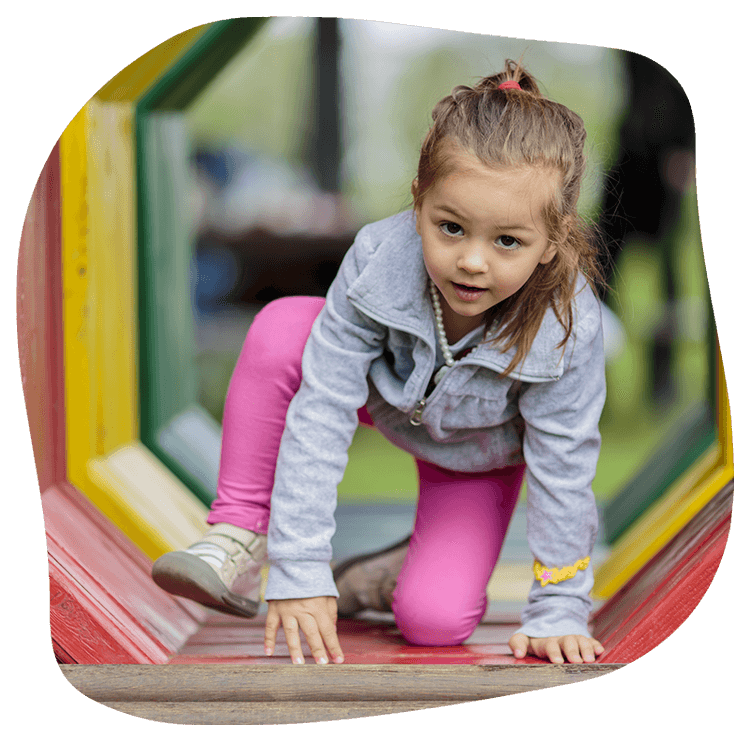
At Sanctuary, we do not think of indoor and outdoor play as separate categories. They are part of a continuous, interconnected experience of childhood. Our outdoor spaces have been designed with the same intentionality as our indoor rooms natural materials, loose parts, spaces for risky and adventurous play, quiet corners, digging patches, and places that connect children to the natural world.
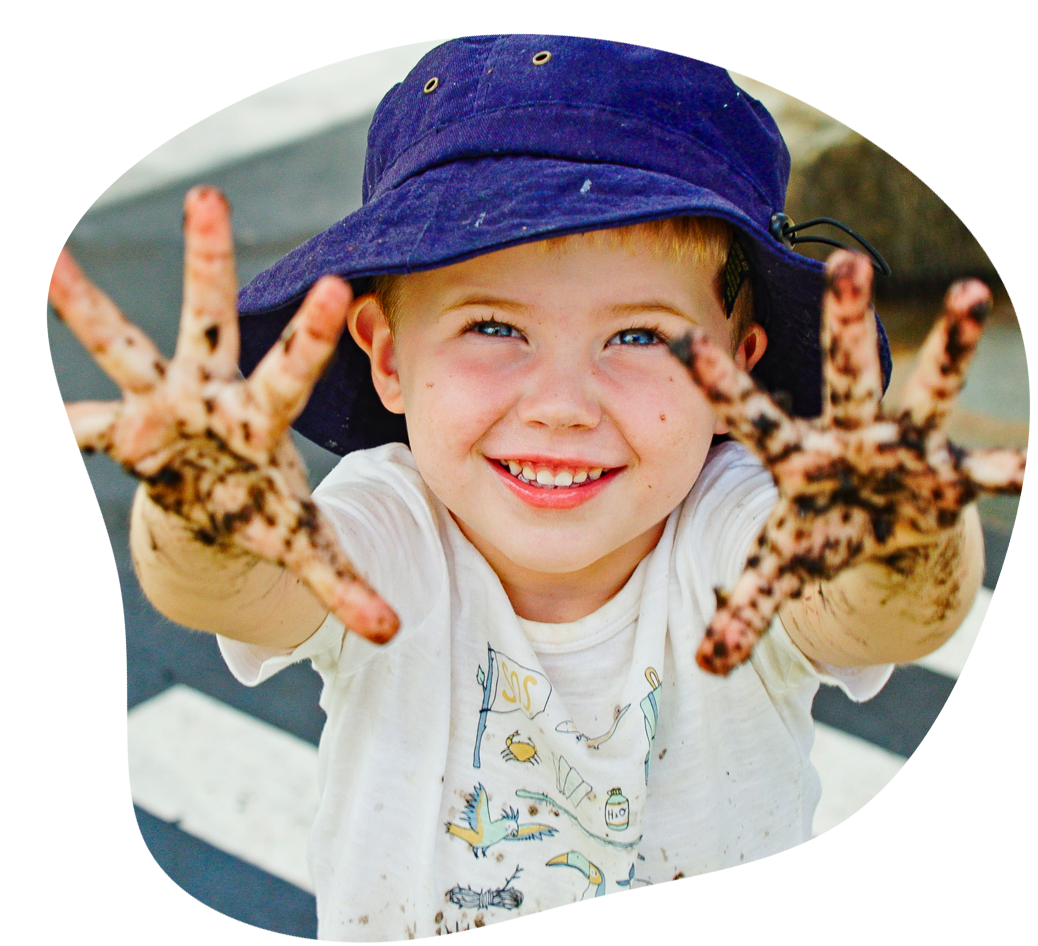
We know from both research and practice that outdoor play contributes to physical development, emotional regulation, risk assessment, and wellbeing in ways that are difficult to replicate indoors. Children who dig in soil, climb on rocks, run barefoot on grass, and problem-solve in unstructured natural spaces are building foundations that will serve them their entire lives.
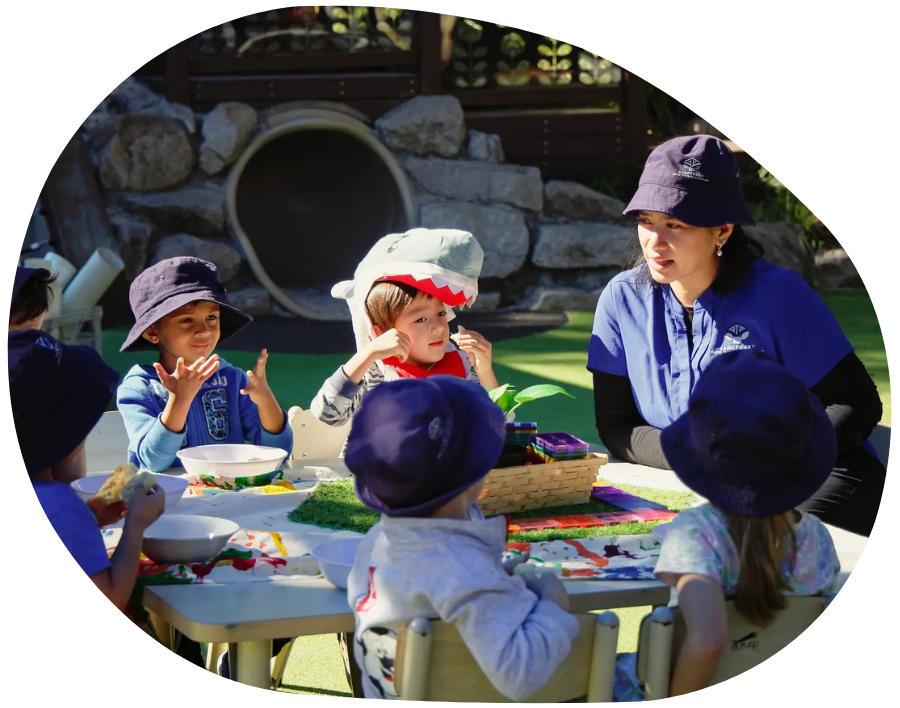
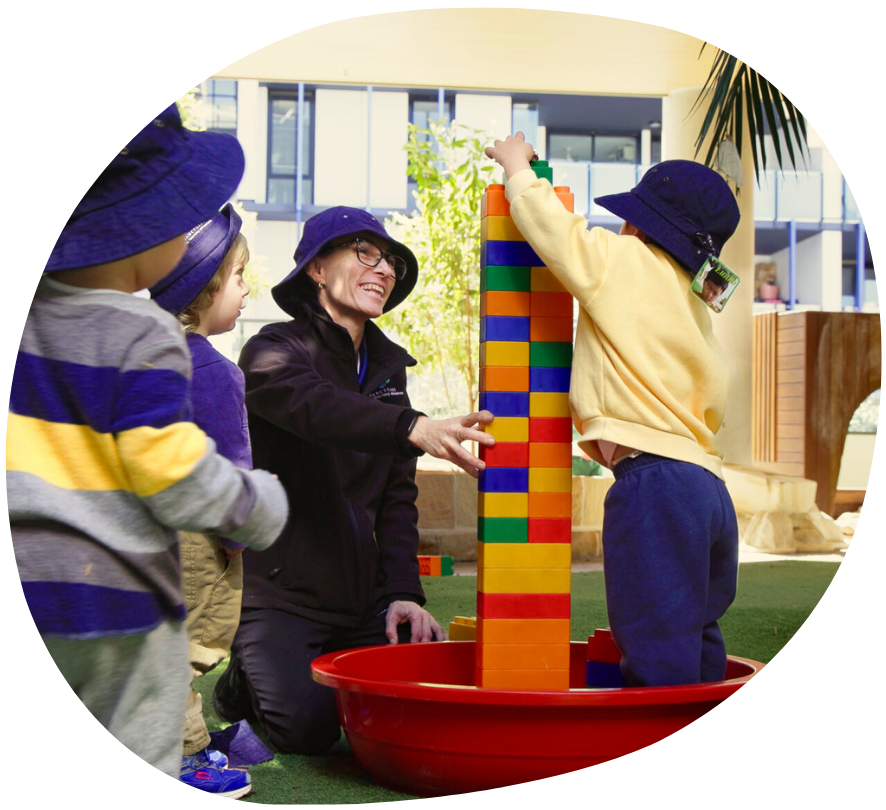
We also know that removing chairs from activity tables, a small simple change that can transform play. When children can stand, move, circle the table, and access all sides of a provocation, their language emerges, their collaboration deepens, and their physical development is quietly but meaningfully supported. We practise these things thoughtfully and reflectively across all our centres.
Authentic Resources: Trusting Children With Real Things
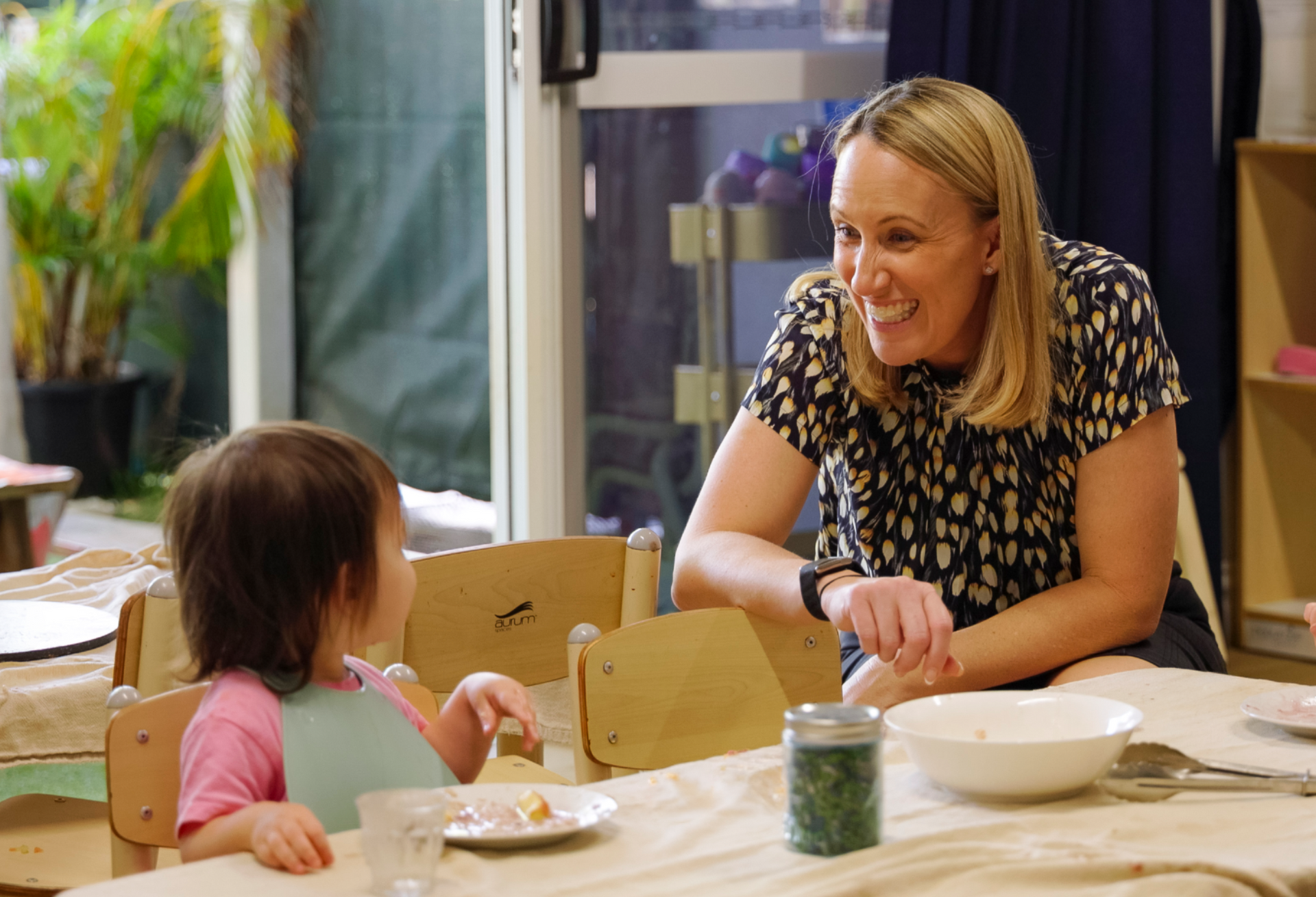
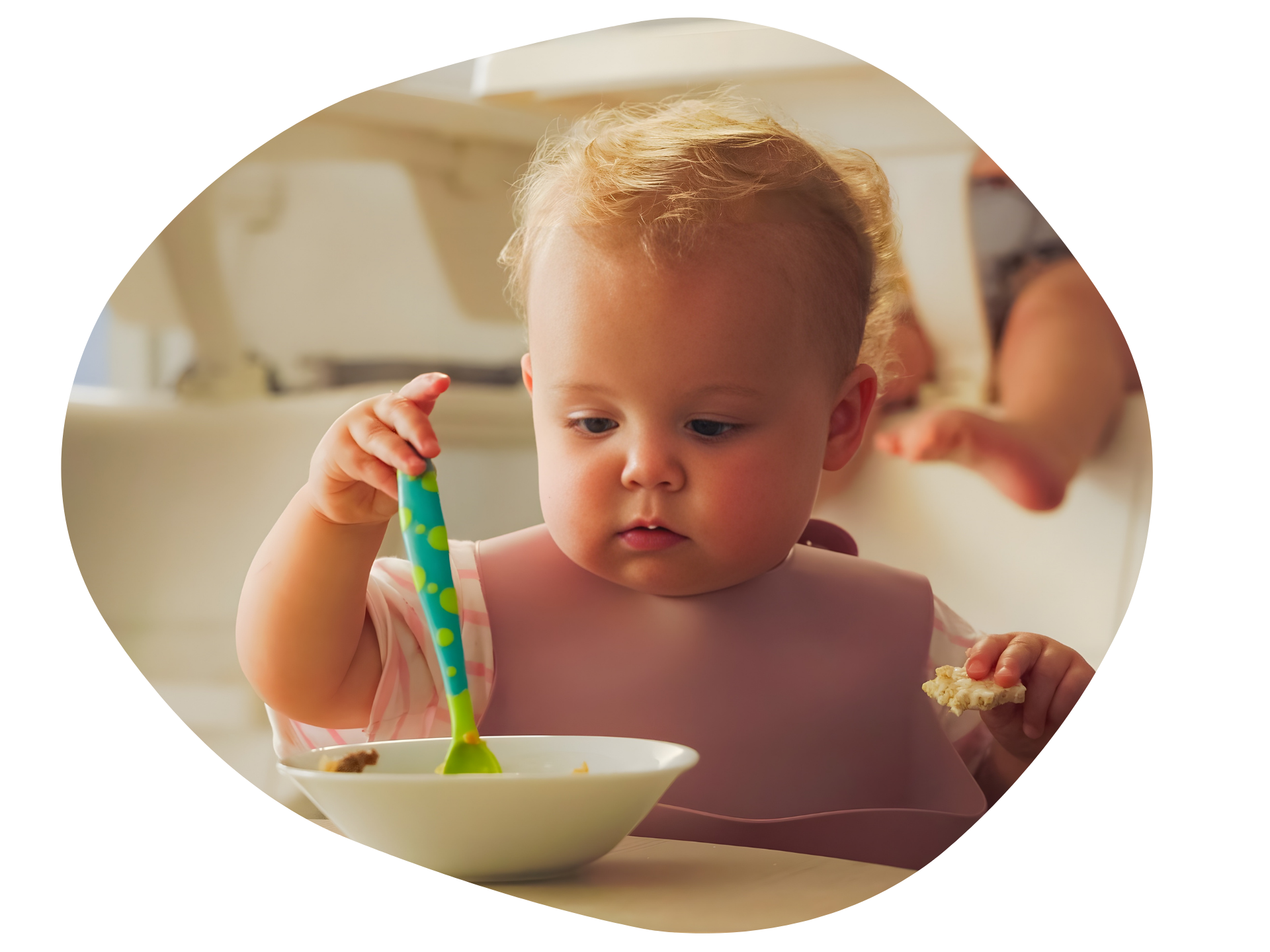
At Sanctuary, our children eat from china plates and bowls. They pour water from glass jugs and use metal cutlery. This is a deliberate expression of our philosophy.
When we give children real, authentic objects beautiful things that belong to the world they are growing into we are communicating something powerful: we trust you. We respect you. This is your space and you are capable of caring for it.
Authentic resources also offer incomparably richer sensory and cognitive experiences. A genuine teapot, a set of glass jars, a mortar and pestle, a set of vintage scales, these items carry history, texture, weight, and purpose. They invite children to ask questions, to role play, to investigate, and to connect their own experience to the wider world.
When items are treated carefully and occasionally break, we do not hide this from children. We use it. We model care and repair. We talk about it. We teach resilience and respect through the everyday reality of living alongside beautiful, real things.
What This Means for Your Child
When your child comes to Sanctuary, they are entering a space that has been deeply and lovingly thought about on their behalf. Every resource, every arrangement, every decision about what to include and what to leave out has been made with their development, their curiosity, and their joy at the centre.
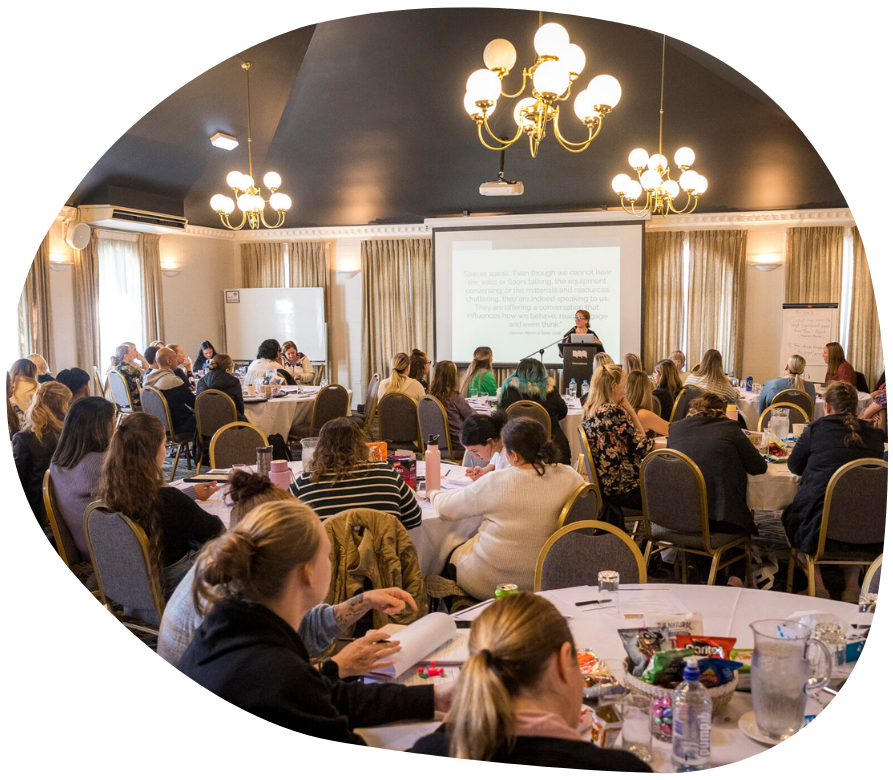
Our educators are trained in the theory that underpins this practice. They know why they do what they do. They reflect on it together, refine it, and share it with families because we believe that when families understand the thinking behind the practice, the learning continues at home too.
If you would like to see this approach in action, we warmly invite you to book a tour at one of our six Queensland centres. Come at play time. Come and watch a child discover something for the first time. Come and see what it looks like when a space truly says: you belong here, you are capable, and this place was made for you.
Enquire Now
✨ Thank you for your enquiry.
Our friendly team will be in touch shortly to help you take the next step with Sanctuary Early Learning Adventure.
Oops, there was an error sending your message.
Please try again or call 1300 00 PLAY.
Recent Articles From Sanctuary